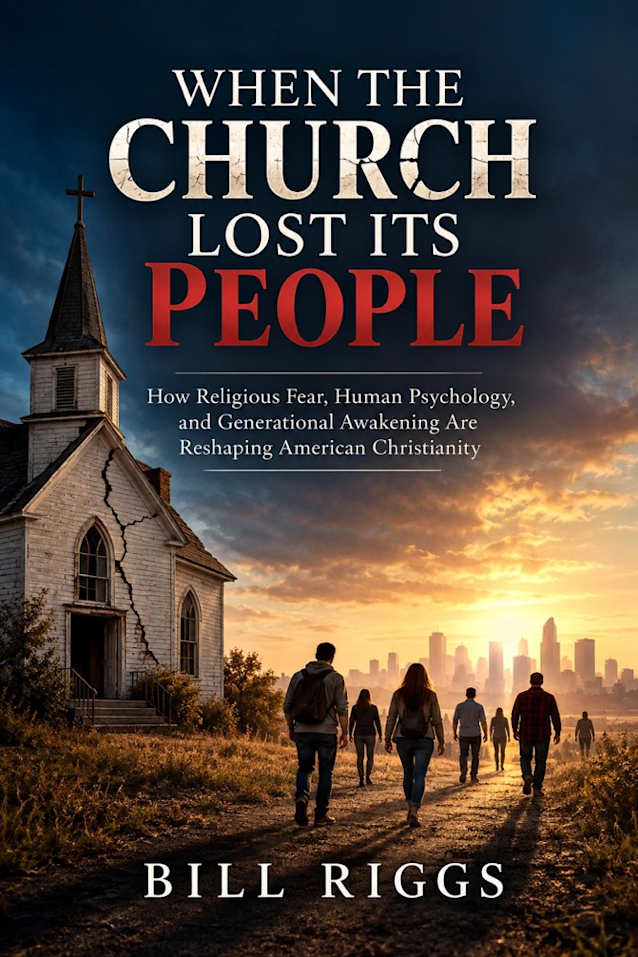
When the Church Lost Its People
About
For generations, American churches shaped the beliefs, values, and spiritual identities of millions. Yet as successive generations began questioning inherited teachings and institutional authority, a troubling divide emerged between organized Christianity and the people it was established to serve.
In When the Church Lost Its People, author Bill Riggs examines how fear-based religious instruction, human psychology, denominational authority, and generational change have contributed to declining confidence in American religious institutions. Drawing upon biblical principles, religious history, and the generational patterns associated with the Fourth Turning, he explores why many people have distanced themselves from organized religion without necessarily abandoning their belief in God.
This is not an argument against Christianity. It is an examination of what happens when institutional preservation becomes more important than discipleship, when religious fear overshadows grace, and when loyalty to a church becomes confused with faith in Jesus Christ.
Riggs challenges churches and believers alike to reconsider the relationship between spiritual authority, human dignity, accountability, and reconciliation. His message is both a call for institutional reflection and an invitation to rediscover the foundational purpose of Christian community.
The church may have lost its people, but the faith was never the institution.